Renters Insurance: What It Covers and Why It's Cheap
Your landlord's policy covers the building, not your things or your liability. What a renters policy pays for, what it leaves out and how to pick an amount.
Key points
- Your landlord's insurance covers the building. It doesn't cover your belongings, and it doesn't cover you if you're sued.
- A renters policy usually combines four covers: your belongings, extra living costs if you have to move out, liability, and medical payments to guests.
- It is cheap because it insures no building. The NAIC's latest data put the national average at $173 a year in 2023.
- Floods and earthquakes are normally excluded, and valuables such as jewelry have lower limits for theft. Check the actual cash value or replacement cost question before you buy.
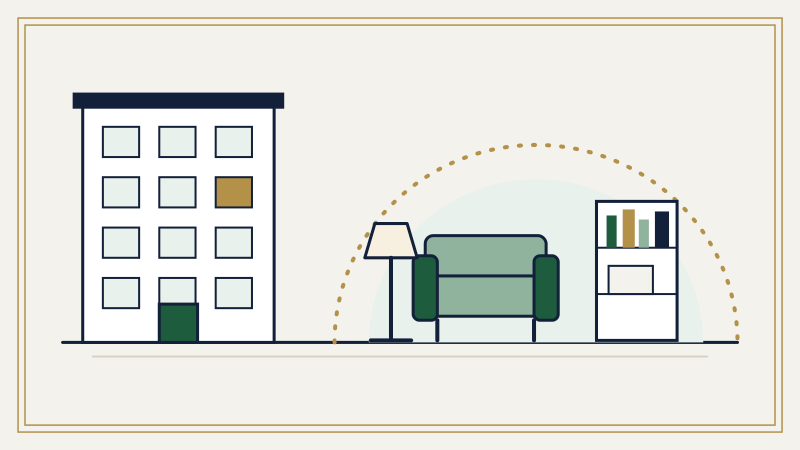
Renting doesn't mean you have nothing to insure. Your landlord's policy covers the building; it doesn't pay for your laptop after a break-in, your clothes after a fire, or a lawsuit when your bathtub overflows into the apartment below. A renters policy does all three, and it usually costs less than many people expect.
What your landlord's insurance doesn't do
State insurance departments say it almost in the same words. California's guide: your landlord does not provide insurance for your personal property. Florida's toolkit: the landlord insures the building but not your belongings. The New York Department of Financial Services adds that many uninsured renters wrongly believe the landlord's policy covers their possessions; the narrow exception is damage caused by a hazard the landlord knew about and failed to fix in reasonable time.
The same goes for liability. If a guest trips in your apartment, or a leak you caused damages a neighbor's unit, the claim is against you, not the landlord.
What a renters policy covers
A standard renters policy, known in the industry as an HO-4, is a named perilsA policy that covers only the causes of loss it lists, such as fire, theft or a burst pipe. Anything not on the list isn't covered. policy: it pays for losses from the causes it lists. The standard industry form lists 16, including fire or lightning, windstorm or hail, theft, vandalism, smoke, falling objects, the weight of ice or snow, freezing, and the accidental discharge of water or steam, such as from a burst pipe.
| Coverage | What it pays for | A common amount |
|---|---|---|
| Personal property | Your belongings, at home or elsewhere, damaged or stolen through a covered peril | An amount you choose |
| Loss of use | Extra living costs if a covered loss makes your home unfit to live in | Often 20% of the personal property limit |
| Personal liability | Claims and legal defense if you're responsible for someone's injury or damage to their property | Generally at least $100,000 |
| Medical payments to others | Medical bills of guests hurt at your home, whoever is at fault | Generally at least $1,000 |
Amounts from the California Department of Insurance's residential insurance guide (revised January 2026). Other states and insurers can differ.
The personal property cover follows your things, not the address: the standard form covers property you own or use "anywhere in the world", so a bike stolen at work or a suitcase stolen on a trip can be claimed. loss of useAlso called additional living expenses: the extra cost of living elsewhere, such as a hotel or meals, while your home can't be lived in after a covered loss. pays the extra cost of a hotel and meals if a covered loss, such as a fire in the building, makes your home unlivable. Liability pays claims against you and, in the words of the standard form, a defense at the insurer's expense "even if the suit is groundless, false or fraudulent", until the limit is used up. Medical payments to others covers small injuries to guests without anyone having to prove fault.
Why it costs so little
The biggest thing a homeowners policy pays for is the building, and a renters policy doesn't insure one. The NAIC puts it plainly: tenant policies do not provide coverage for the building, so the amounts insured are much lower. The same report finds that 67.1% of renters and condo policies insure less than $35,000, and 92.9% less than $80,000: a fraction of what a house is insured for. In its latest data, for 2023, the average renters premium was $173 a year, against $1,737 for a standard homeowners policy.
| Personal property limit | Average annual premium |
|---|---|
| $10,000 to $14,999 | $140 |
| $20,000 to $24,999 | $156 |
| $50,000 to $59,999 | $205 |
| $100,000 to $124,999 | $328 |
| All renters policies | $173 |
Average premium divided over all policies, not a quote. The NAIC notes that averages hide large differences in hazards and costs from state to state: in 2023 they ranged from $125 in South Dakota to $263 in Mississippi. Source: NAIC, Homeowners and Tenant Insurance Report, data for 2023.
Your price depends on where you live, the amount of cover, the deductible, and whether you choose replacement cost. The deductible is the part of each claim you pay yourself. Lemonade, for one, says its renters deductibles run from $250 to $2,500, depending on the state. A higher deductible lowers the premium, but only makes sense if you could pay it without strain. Be careful with "as little as" prices in ads: Allstate's "$5 per month", for example, is defined in its own footnote as the national average of its lowest premiums, not a typical price.
Actual cash value or replacement cost
This is the choice that most changes what a claim pays. With actual cash valueWhat an item was worth when it was lost: the cost to replace it minus depreciation for age and wear. A five-year-old laptop is paid at its current value., the insurer pays what your things were worth at the time of the loss, minus depreciation and your deductible. With replacement costWhat it costs to buy a new item of similar kind and quality today, without a deduction for depreciation. It costs more than actual cash value cover., it pays what a new equivalent costs today.
The difference is real money. Florida's renters toolkit uses a television bought for $1,000: under actual cash value, a few years later, the payment might be $500. The standard industry form pays actual cash value unless you add replacement cost cover. The NAIC notes that actual cash value may save money at first but can cost you more in the long run if you need to replace damaged or stolen items.
What renters insurance usually leaves out
Floods. Standard renters policies don't cover flood. FEMA's National Flood Insurance Program sells a separate contents-only policy for renters, with up to $100,000 of cover, generally after a 30-day waiting period. Texas now requires landlords to tell prospective tenants if they know the home is in a 100-year floodplain.
Earthquakes. The standard form excludes earthquake, land shock waves and tremors. Ask the insurer whether separate earthquake cover is available where you live.
Other people's things. A roommate who isn't a relative isn't insured under your policy, and the property of roomers and other tenants is excluded.
Valuables above a sublimitA lower limit inside the policy for a particular kind of property or loss, such as theft of jewelry, whatever the overall limit on your belongings.. The policy may cover your belongings up to $30,000, yet cap theft of jewelry at a much lower figure.
| Type of property | Limit for theft |
|---|---|
| Money and similar | $200 |
| Jewelry, watches and furs | $1,500 |
| Firearms | $2,500 |
| Business property kept at home | $2,500 |
Ask the insurer whether items above these limits can be scheduled separately, and at what extra premium.
If you own something worth more than these limits, such as an engagement ring or professional equipment, ask the insurer to schedule it separately.
How to choose an amount
Start with an inventory. The NAIC offers a free Home Inventory app to list and photograph what you own, room by room. Add it up at what it would cost to replace, then choose a personal property limit that covers it. For liability, think about what you would stand to lose in a lawsuit, not just the minimum the insurer offers.
Before you buy, check that the insurer is licensed in your state. The NAIC's Consumer Insurance Search shows three years of closed complaints by company, and your state insurance department can confirm the license.
If you have to make a claim
The policy sets out what you must do after a loss, and not doing it can put the claim at risk. The standard industry form lists the duties plainly: give the insurer prompt notice, notify the police in case of theft, protect your property from further damage and keep a record of what repairs cost, cooperate with the investigation, and prepare an inventory of what was damaged or stolen, with quantities, descriptions and values, backed by bills and receipts.
It is also the one you can prepare for. Doing the inventory before anything happens is far easier than rebuilding it from memory after a fire. The NAIC suggests going through each room, writing down and photographing what is there, and storing the record away from home, for example online or with a relative, then reviewing it once a year.
If you disagree with the insurer's decision, ask for the reasons in writing. You can also file a complaint with your state insurance department, which the NAIC lists as the place to go when you're dissatisfied with an insurer or agent.
What to consider before choosing
-
What would it cost to replace everything you own?
Walk through your home room by room, or use the NAIC's free Home Inventory app.
-
Actual cash value or replacement cost?
Actual cash value is cheaper, but pays what old things are worth today. If you couldn't afford to replace your belongings at their current prices, replacement cost cover is worth pricing.
-
What could you be sued for?
Liability cover protects your savings if a guest is hurt or you damage someone else's property, for example with a leak into the unit below. Consider what you have to lose, not just the minimum.
-
Is your building in a flood zone?
Renters policies normally exclude flood. If flooding is possible where you live, ask about a separate contents-only flood policy.
Questions to ask before you sign
Ask the insurer or agent these questions, and check the answers on the declarations page and in the policy:
- Is this policy actual cash value or replacement cost for my belongings, and what would replacement cost add?
- What are the limits for personal property, loss of use, liability and medical payments?
- What is the deductible, and does it apply to every claim?
- Which causes of loss are covered, and are water backup, flood and earthquake excluded?
- What are the special limits for jewelry, electronics, bikes, cash and business equipment, and how can I schedule valuables?
- Does the policy cover my belongings away from home, and in a storage unit?
- Who is insured: my spouse, partner, children, roommate?
- What discounts apply, for example for smoke alarms or bundling with car insurance?
Common questions
Can my landlord require me to have renters insurance?
It depends on the state and the lease. Texas, for example, notes that renters insurance isn't required by law but some landlords require it, and Virginia's law allows it as a condition of tenancy.
Does renters insurance cover my roommate?
Not automatically. In the standard form, a roommate who isn't a relative isn't an insured, and property of roomers and other tenants is excluded. Each roommate usually needs a policy, or must be named on one.
Does it cover my things outside the home?
Generally yes: the standard form covers personal property anywhere in the world. Property kept in a self-storage unit is limited to 10% of the personal property limit or $1,000, whichever is greater.
Is a flood covered?
Normally not. FEMA's National Flood Insurance Program sells a contents-only policy for renters with up to $100,000 of cover, usually after a 30-day waiting period.
How do I make a claim easier?
Keep a home inventory with photos and receipts, stored somewhere other than your home. Report theft to the police and the loss to the insurer as soon as you can.